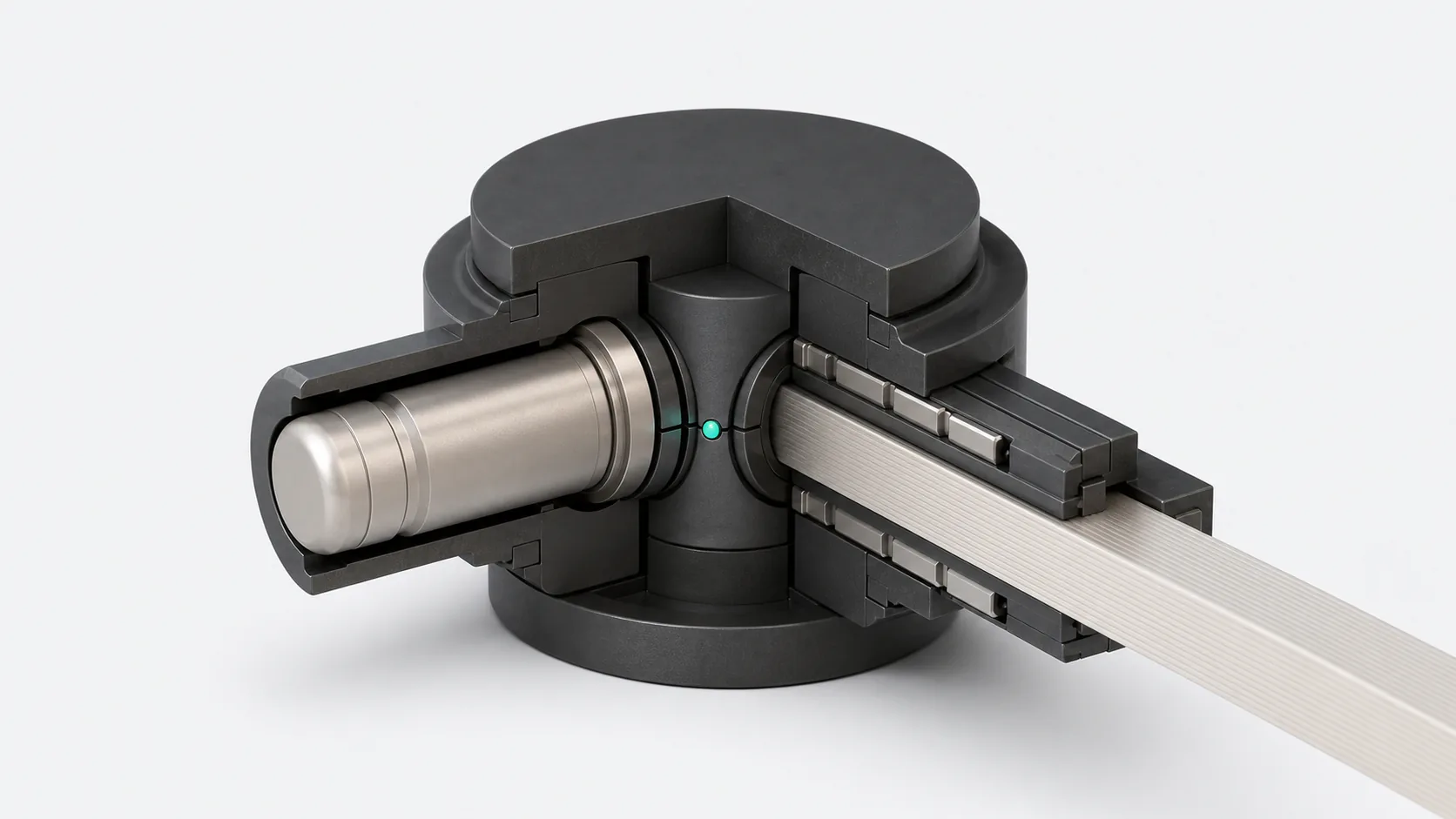
The migration gives durable product rules one stricter home
In late 2025, the box and pattern work moved into Rust. The application around it still had more than one idea of where durable rules belonged. That became expensive each time a view, scanner, or long-running process needed the same answer.
The July migration moved the application runtime to Rust as well. The visible result was modest: the site kept loading, live boxes kept moving, and Trade gained a firmer handoff. The important change was that the rules underneath those surfaces had one stricter home.
The old shape had served its purpose
The earlier runtime helped us explore quickly. It carried experiments while the range model, authentication, storage, and live views were still changing shape. Speed mattered because we were learning what the software needed to become.
Exploration leaves seams. A definition that begins beside one screen can be copied into another service. A recovery rule can live far away from the state it protects. Each local choice can be reasonable while the whole system becomes harder to explain.
By July, the cost showed up in ordinary work. A change to shared market behavior required checking too many interpretations. Long-running work needed clearer ownership. The local terminal needed a dependable relationship with the same box state people saw on screen. Adding another adapter would have preserved the ambiguity.
Migrate behavior, not vocabulary
We kept the public concepts stable through the move. A ResoBox still represented a fixed price range. Trend Hints still surfaced selected conditions. The views still read the same family of market state.
That constraint made the migration useful. The goal was not to announce a new protocol or ask users to care about server fashion. It was to move responsibility without changing the meaning of the objects on screen.
Rust made assumptions harder to leave implicit. A value has an owner. A failure has a path. Work that remains alive over time needs a lifecycle someone can describe. The language did not answer those questions for us, though it made avoiding them uncomfortable.
A quieter release is a good release
Infrastructure work can tempt a team to turn implementation into identity. We measure this migration by the opposite effect: less architecture showing through the interface.
A person should be able to open the dashboard after a laptop wakes and see whether the view is current. A Trade operator should have a clear status and stop control. Two surfaces reading the same market should not drift because they inherited different rules. Those are product behaviors. Rust is one way we make them durable.
The move also created a useful limit. Not every part of the site belongs in one language, and shared rules do not require identical applications. The public web experience can evolve on its own terms. Research can remain exploratory. The core holds only the definitions and long-running responsibilities that benefit from one explicit owner.
The migration succeeded when the machinery became less interesting than the continuity it protected.